
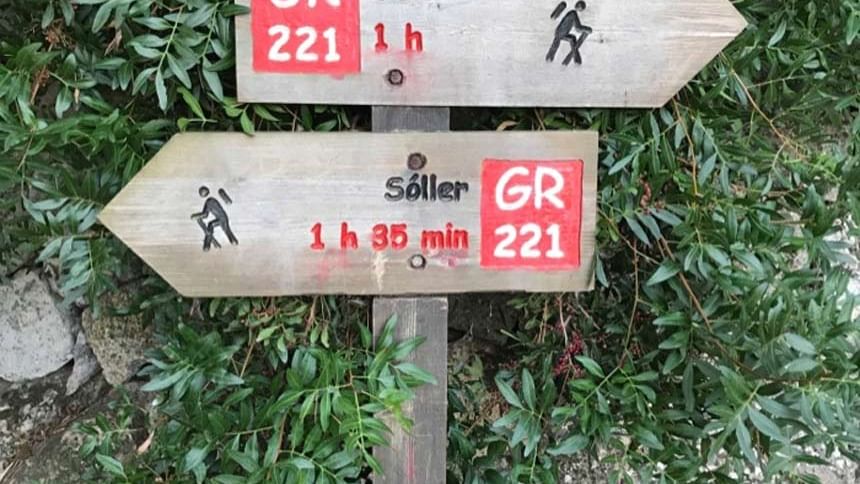
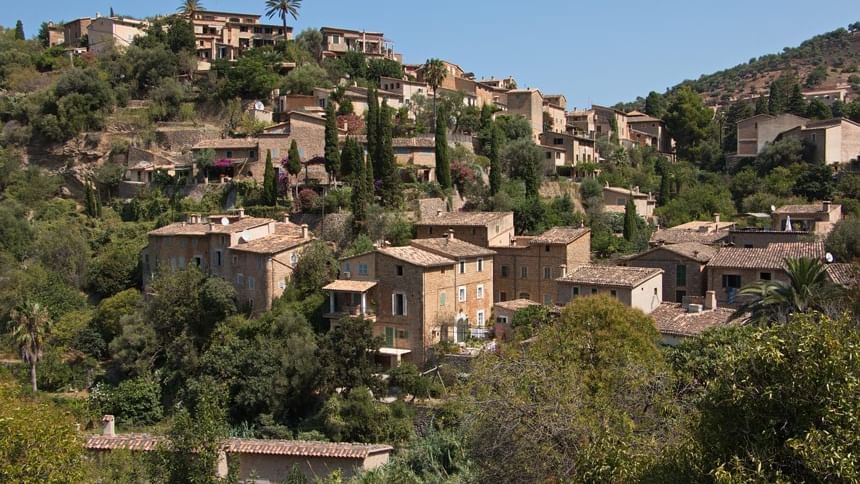
Sóller, located in the heart of the Serra de Tramuntana—declared a UNESCO World Heritage Site—is one of the most special natural enclaves in Mallorca and a privileged starting point for hiking enthusiasts. Its mountains, historic stone-paved paths, and excellent location between the valley and the sea make it possible to begin numerous routes that captivate both experienced hikers and occasional walkers alike.
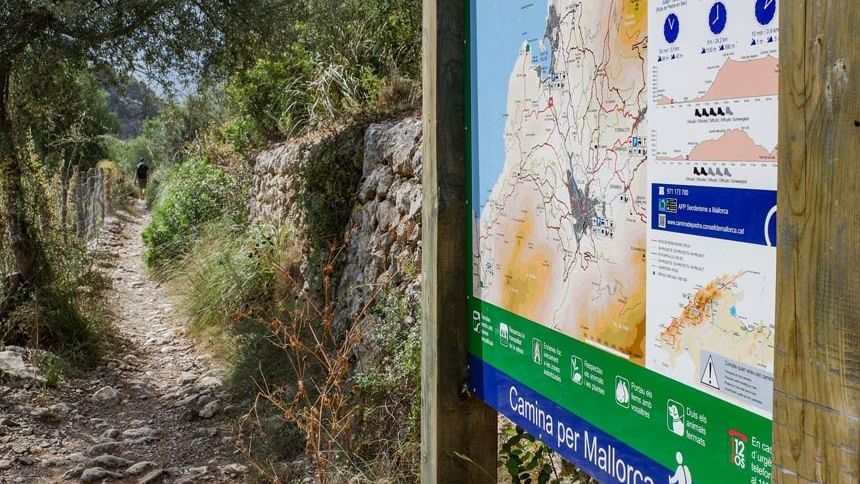
For this reason, today we invite you to discover, starting from the Gran Hotel Sóller, one of the most emblematic excursions in the area: the Camí Vell de Castelló, an ancient medieval route connecting Sóller and Deià, which today forms part of the GR-221, the well-known Ruta de Pedra en Sec (Dry Stone Route). It is a walk that combines history, heritage, and some of the most representative views of the Serra de Tramuntana.
FROM GRAN HOTEL SÓLLER TO CAMÍ D’ES ROST
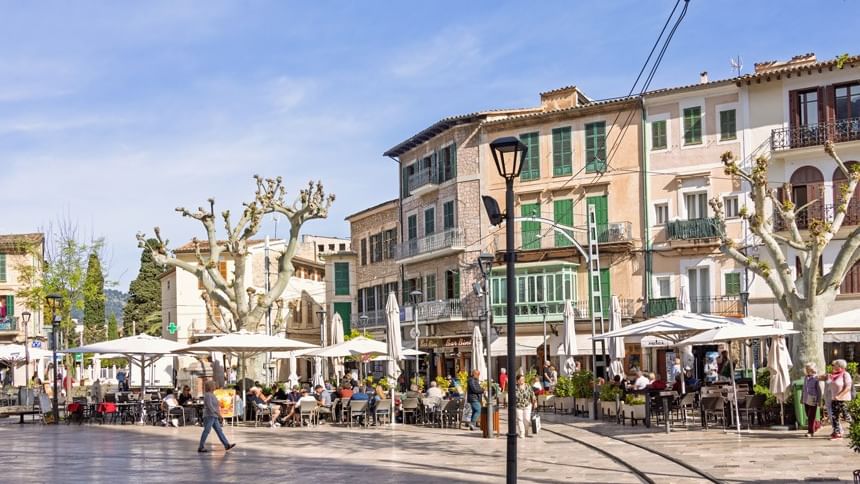
We will begin the route by leaving Gran Hotel Sóller in the direction of Plaça de sa Constitució, located in the center of the town. From one end of the square we will take Carrer Bauçà, followed by Carrer de la Rectoria. We will then continue along Quadrado and Capità Angelats streets until we reach the road connecting Sóller with Port de Sóller.
Once on the road, we will head toward the town’s main petrol station. Directly opposite, on the other side of the road, begins the Camí des Rost, clearly signposted and easy to identify. A commemorative monolith marks the renovation of the path carried out in 1989 and signals the beginning of this excursion.
From here we start the ascent along this paved section, leaving behind several houses and the characteristic orange groves of the Sóller valley. After the first bend we reach a junction in front of the house Ferreria Calafell. The Camí de Rocafort branches off to the left, but we will continue straight ahead, following the main course of Camí des Rost.
FROM CAMÍ DES ROST TO CAMÍ DE CASTELLÓ
The path gradually becomes steeper as we continue parallel to the road. Little by little the asphalt disappears and the surface alternates between dirt sections and remains of the old stone paving, reminding us of the historic nature of this communication route between villages.
Along this first stretch we will ignore the turnoffs that appear on the right and always follow the main path, which leads us toward an area where the paving becomes more visible and the landscape features more terraces and dry-stone walls.
Further on we will cross the Sóller train tracks—with caution—and continue climbing between terraces and dry-stone walls until reaching the cases del Pujol d’en Banya.
From this point onward we join the Camí de Castelló itself. The path becomes a true mule track, clearly defined by stone walls and with paving that in many sections remains in excellent condition. From here the landscape takes on a more distinctly mountainous character and leads us into one of the most emblematic sections of the excursion.
FROM CAMÍ DE CASTELLÓ TO THE ORATORY OF CASTELLÓ
Now immersed in the Camí de Castelló, we walk along one of the best-preserved examples of traditional dry-stone architecture in the Serra de Tramuntana. The route ascends gently between ancient olive groves and agricultural terraces that still preserve their original structure.
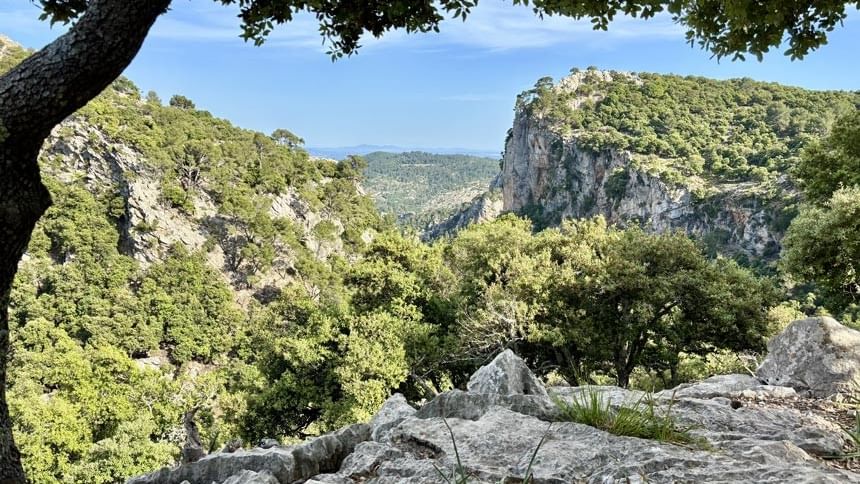
As we gain altitude, the valley lies at our feet and the surrounding mountains reveal themselves in all their splendor. We will pass several secondary paths descending toward Sóller, but we continue always in the direction of Deià.
After several minutes of ascent we reach the houses of Can Carabasseta and shortly afterward the Oratory of Castelló, located on our left. This small 17th-century chapel once served as a place of worship for the scattered inhabitants of nearby estates and is one of the most notable heritage landmarks along the route.
FROM THE ORATORY OF CASTELLÓ TO DEIÀ
Leaving the oratory behind, the path continues between terraces and dry-stone walls toward the houses of Can Prohom and Son Mico, former estates of considerable historical importance in the area.
Just a few meters from the main route we will find the Font de Ses Mentides, whose name is linked to historic disputes between local landowners over water usage. From here, a gentle climb leads us to the small hamlet of Son Coll, one of the historic settlements of the municipality of Deià.
From Son Coll we begin the final descent, always along the walled path, enjoying views toward the coast and the mountainous landscape surrounding Llucalcari. The trail eventually emerges onto the Sóller–Deià road. If we decide to walk along the road to complete the final stretch—especially in summer—it is important to take extra care due to traffic.
From here we can either continue to the center of Deià along the road or follow signposted paths that lead to the village in a more pleasant way.
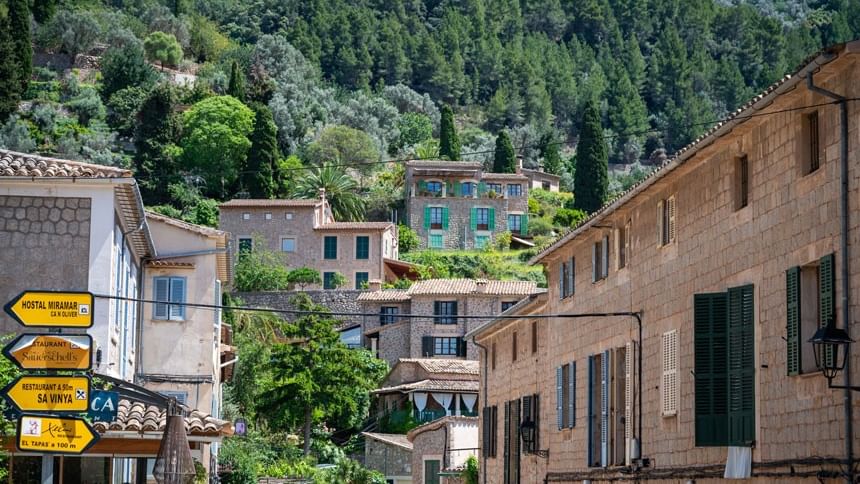
Once in Deià, we can wander through its cobbled streets and discover one of the culturally richest villages of the Serra de Tramuntana. At the top stands the Parish Church, next to the cemetery, from where magnificent views of the surrounding landscape can be enjoyed.
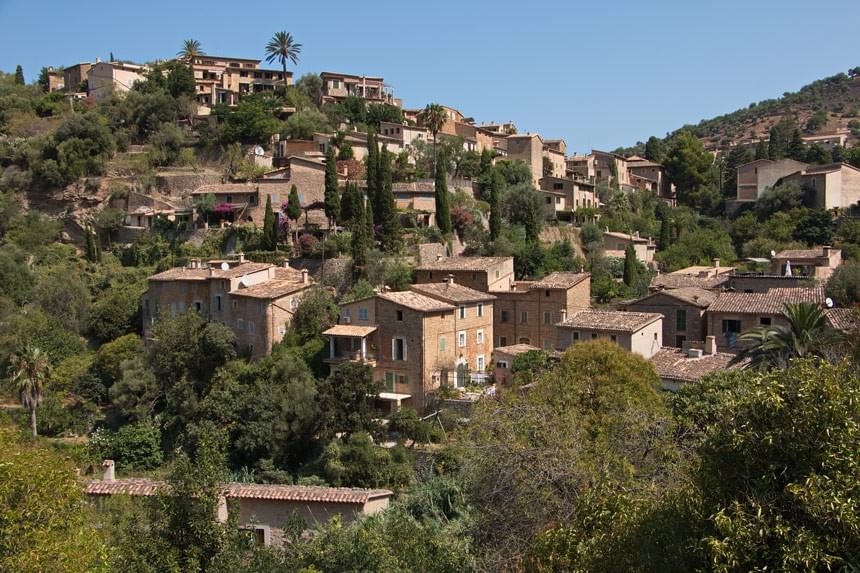
Very close to the village center we also find notable places such as Son Marroig, the former residence of Archduke Ludwig Salvator of Austria, or the Robert Graves House (Ca n’Alluny), now a house-museum dedicated to the British writer.
After the visit, returning to Gran Hotel Sóller can easily be done by taxi or via bus line 203, bringing to a close a day that combines heritage, landscape, and tradition in one of the most unique corners of northern Mallorca.
If you are staying at our hotel and would like more information about this route or other excursions in the Sóller Valley and the Serra de Tramuntana, please do not hesitate to contact our reception team, who will be delighted to assist you.